
Invisalign vs Braces: Cost, Timeline, and Does It Hurt?
Invisalign vs Braces: Cost, Timeline, and Does It Hurt?
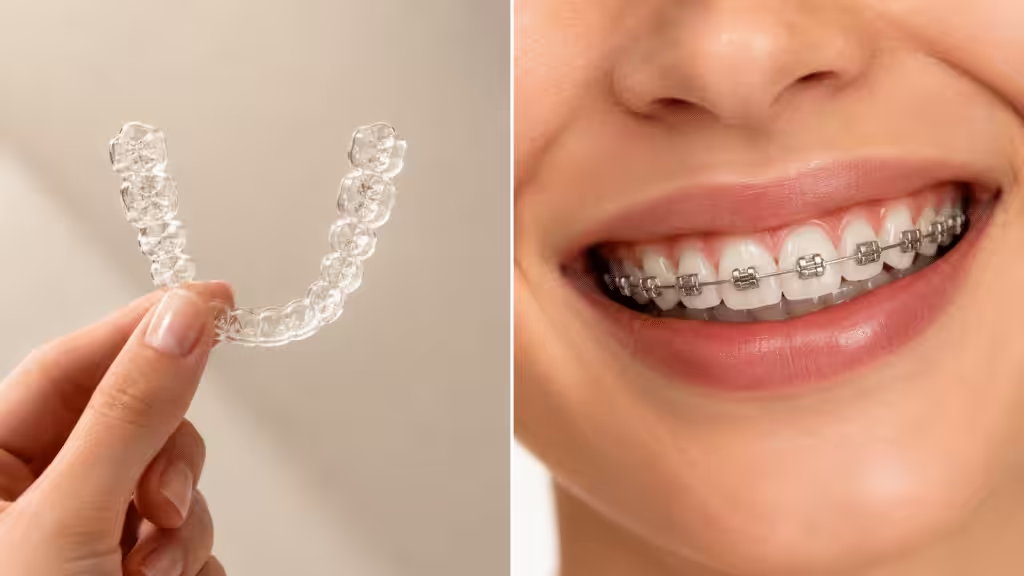
You want straighter teeth, and you're stuck between clear aligners and metal brackets. The Invisalign vs braces decision comes down to three things people actually care about: what it costs, how long you're stuck in treatment, and how much it's going to hurt. Most comparison pages bury those answers under a feature list, so this one puts them first: real 2026 pricing for both, treatment timelines that aren't sugar-coated, and a straight answer on pain, including the question people quietly Google at midnight: does Invisalign hurt?
Which one wins depends on your teeth, your schedule, and how much discomfort you'll tolerate.
Braces Cost vs Invisalign Cost
Money is the first filter for most people, so start there.
In 2026, traditional metal braces typically cost $3,000 to $7,000, while Invisalign runs $4,500 to $8,000, with San Francisco sitting at the upper end of both ranges. The headline takeaway: braces are usually a bit cheaper upfront, but the gap has narrowed dramatically over the past few years.
| Factor | Braces | Invisalign |
|---|---|---|
| Typical cost | $3,000 to $7,000 | $4,500 to $8,000 |
| Insurance | Often covered like ortho | Often covered like ortho |
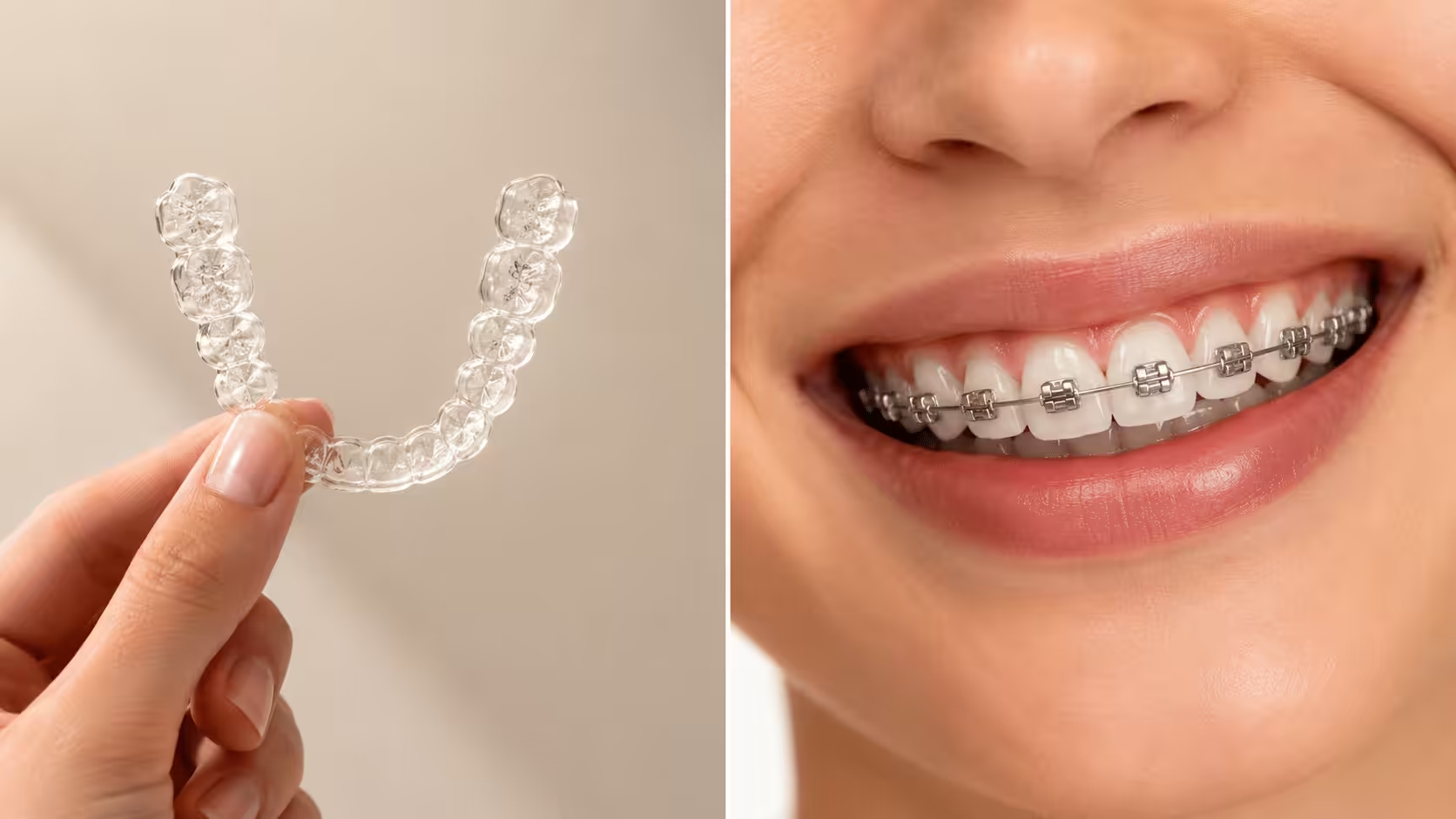
| Visibility | Visible metal | Nearly invisible |
| Removable | No | Yes |
Two cost wrinkles matter. First, insurance treats both the same, usually covering around 50% up to a lifetime orthodontic maximum, so the effective gap is often smaller than the sticker prices suggest. Second, Invisalign has a hidden cost braces don't: if you lose a tray, replacements run $200 to $400, though many offices include a free replacement or two. For a full local breakdown, see our guide to Invisalign cost in San Francisco.
How Long Does Invisalign Take?
Time in treatment is where Invisalign often pulls ahead, though it depends on your case.
Invisalign typically takes around 8 months to a year, while traditional braces usually run 18 to 24 months. Complex bite issues can push either treatment longer.
The part the marketing skips: Invisalign only works if you wear it 22 hours a day. Braces are fixed, so they work whether you cooperate or not. With Invisalign, taking the trays out too often is the number one reason treatment drags past its estimate. So the timeline advantage is real, but it's conditional on your discipline. If you know you'll leave them out, braces may genuinely finish faster for you.
You'll also see your dentist on a similar rhythm with both: roughly every four to six weeks for a check-in and your next set of aligners.
A nuance the comparison charts flatten: for mild to moderate cases, Invisalign's shorter timeline is real, but head-to-head clinical studies have found aligners and fixed braces finishing comparable cases within about a month of each other. So the timeline gap narrows the more complex your case gets, and your wear-time discipline matters more than the brand.

Does Invisalign Hurt?
The question everyone wants answered honestly. Invisalign causes mild pressure and soreness, but it generally hurts less than braces. There are no metal brackets or wires to rub against your cheeks and lips, which removes the most common source of braces irritation.
So what does the discomfort feel like? When you switch to a new set of aligners, your teeth feel sore and tight for the first two to three days, because the new tray is actively pushing them into a new position. That ache is the treatment working, not something going wrong. It fades as your teeth settle, then returns mildly with each new tray.
Why does Invisalign hurt at all? Because moving teeth requires force, and force on a tooth creates pressure on the surrounding bone and ligament. That's true of every orthodontic treatment ever invented. The difference is that Invisalign applies it gradually and without hardware digging into soft tissue. Over-the-counter pain relievers handle the worst of it, and switching to new trays at night lets you sleep through the most uncomfortable hours.
Invisalign vs Braces: Pros and Cons
A quick, honest scorecard before the verdict.
Invisalign pros: nearly invisible, removable for eating and big moments, more comfortable, easier to brush and floss, often a shorter timeline.
Invisalign cons: requires discipline (22 hours daily), can cost a bit more, easy to lose a tray, not ideal for the most severe cases.
Braces pros: usually cheaper, no discipline required since they're fixed, handle the most complex and severe cases reliably.
Braces cons: highly visible, can irritate cheeks and lips, harder to clean around, typically a longer timeline, dietary restrictions.
It nets out simply enough. Invisalign wins on lifestyle and comfort for mild to moderate cases. Braces win on cost and on severe, complex corrections.
Is Invisalign Worth It?
After the comparison, the real question: is Invisalign worth it for you?
For most adults with mild to moderate misalignment who'll actually wear the trays, Invisalign is absolutely worth it. The ability to remove it for a meal, a meeting, or a photo, combined with the near-invisibility, is the reason so many people who avoided braces for decades finally straighten their teeth. The comfort and the shorter average timeline are real bonuses, but the result is the part that lasts: a straight smile you bring to the date, the interview, and the wedding without a flicker of self-consciousness.
It's less worth it in two situations. If your case is severe and complex, braces may deliver a better, more reliable result, and your dentist will tell you so. And if you genuinely won't commit to wearing aligners 22 hours a day, you'll waste money watching your timeline stretch, and braces would serve you better. The real answer comes from an exam, where a dentist tells you which camp your bite falls into instead of defaulting to the pricier option.
Choosing What's Right for Your Smile
There's no universal winner in the Invisalign vs braces debate. The right pick comes down to your case, your budget, and your discipline. Mild to moderate misalignment plus a willingness to wear the trays points to Invisalign. A severe case or a tight budget can point to braces. With the costs, the timelines, and the real story on discomfort in hand, that conversation with your dentist gets a lot shorter. Straightening is also the first step in many smile makeovers, which our complete guide to cosmetic dentistry in San Francisco walks through.
Frequently Asked Questions
Is Invisalign cheaper than braces?
Usually no. Braces typically cost $3,000 to $7,000 and Invisalign runs $4,500 to $8,000, so braces are often slightly cheaper upfront. But the gap has narrowed, and insurance covers both the same way, around 50% up to a lifetime orthodontic maximum, which shrinks the effective difference.
How long does Invisalign take to work?
Invisalign typically takes around 8 months to a year. Braces usually run 18 to 24 months. Your teeth start shifting within the first few weeks, but Invisalign only works if you wear the trays 22 hours a day.
Does Invisalign hurt the first day?
Yes, mildly. When you start a new aligner, including the first one, your teeth feel sore and tight for two to three days as the tray pushes them into position. That soreness is the treatment working. It fades as your teeth settle and returns briefly with each new set of trays.
Why does Invisalign hurt?
Invisalign hurts because moving teeth requires force, which creates pressure on the surrounding bone and ligament. This is true of all orthodontic treatment. The discomfort is mild and short-lived, and Invisalign avoids the cheek and lip irritation that metal brackets and wires cause with braces.
Does Invisalign hurt less than braces?
Generally yes. Invisalign causes pressure and soreness like any treatment that moves teeth, but it has no brackets or wires to rub against and cut your cheeks and lips. Most patients report less overall discomfort with Invisalign than with traditional braces.
Is Invisalign worth it for adults?
For most adults with mild to moderate misalignment who'll wear the trays consistently, yes. The near-invisibility and the ability to remove it for meals and meetings make it ideal for professional life, and the result lasts. Severe cases or low compliance may be better served by braces.
Find Out Which One Fits You. The fastest way to know is an exam, not a comparison chart. Book a consultation at Skoulas DDS and Dr. Skoulas will assess your bite and tell you honestly whether Invisalign or braces will get you the best result, with clear pricing for each.