
Veneers vs Crowns: Which One Is Right for Your Teeth?
The short version
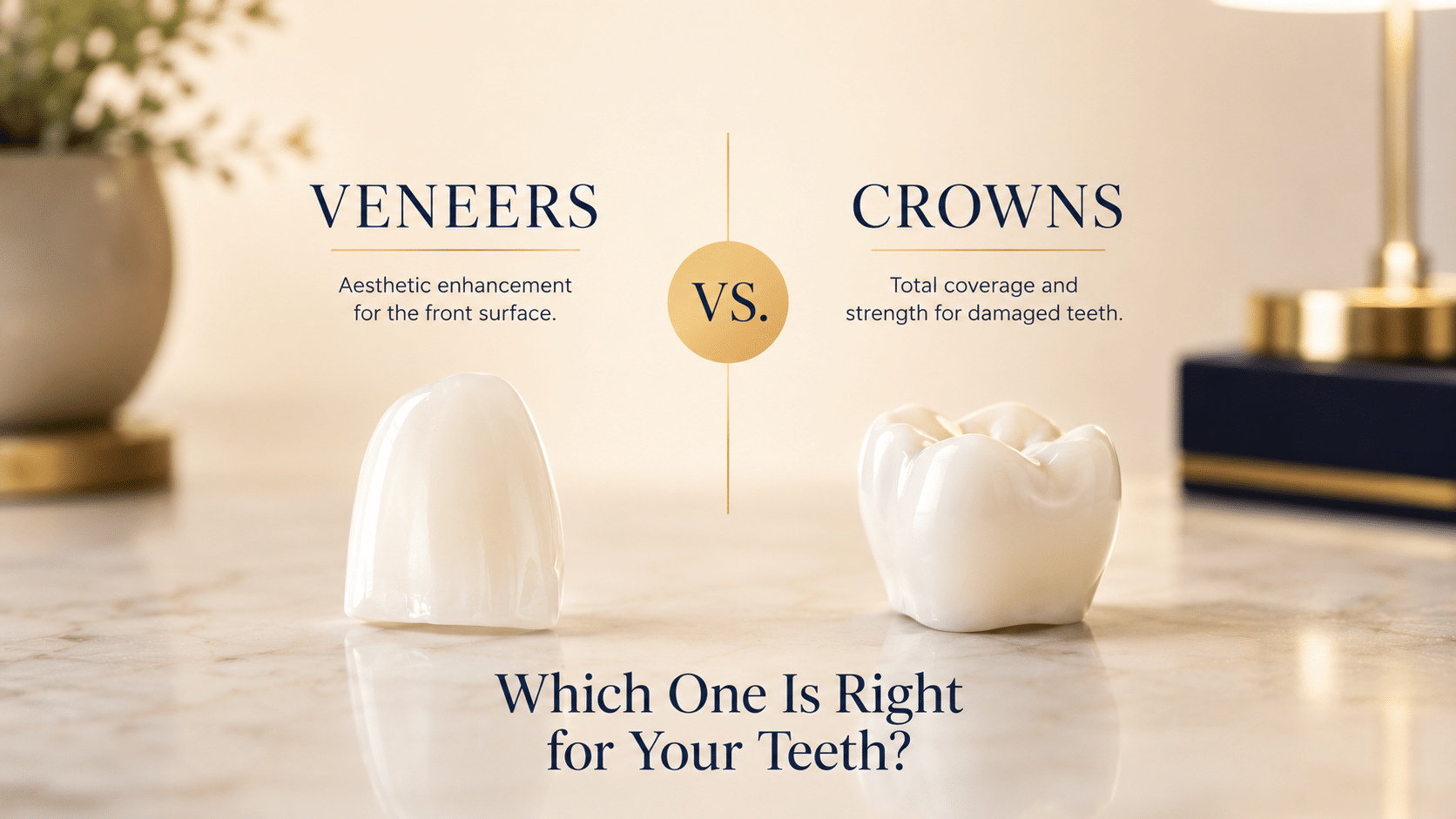
- A veneer covers only the front of a healthy tooth to improve its look. A crown caps the entire tooth to protect one that's damaged.
- A veneer is about 0.3 mm thick and removes just a sliver of enamel. A crown is about 1 mm thick and reshapes the tooth on all sides.
- Crowns are often partially covered by insurance because they're functional. Veneers are cosmetic and rarely covered.
- Porcelain veneers last 10 to 20 years. The choice comes down to one question: is your tooth healthy, or is it damaged?
In this guide
Two patients walk into a dentist's office wanting a better-looking front tooth. One leaves with a veneer, the other with a crown. Same goal, two different treatments, and the reason has almost nothing to do with which one looks better. The veneers vs crowns decision comes down to one question most online guides bury: is your tooth healthy, or is it damaged? Get that answer right and the choice mostly makes itself. Below, the real difference between the two, what each costs, how long they hold up, and whether veneers are worth it for your situation.
Once you know which camp your tooth falls into, the cost and longevity questions get a lot easier.
Veneers vs Crowns: The Core Difference
Strip away the marketing and the distinction is simple. A veneer covers only the front surface of your tooth. A crown covers the entire tooth.
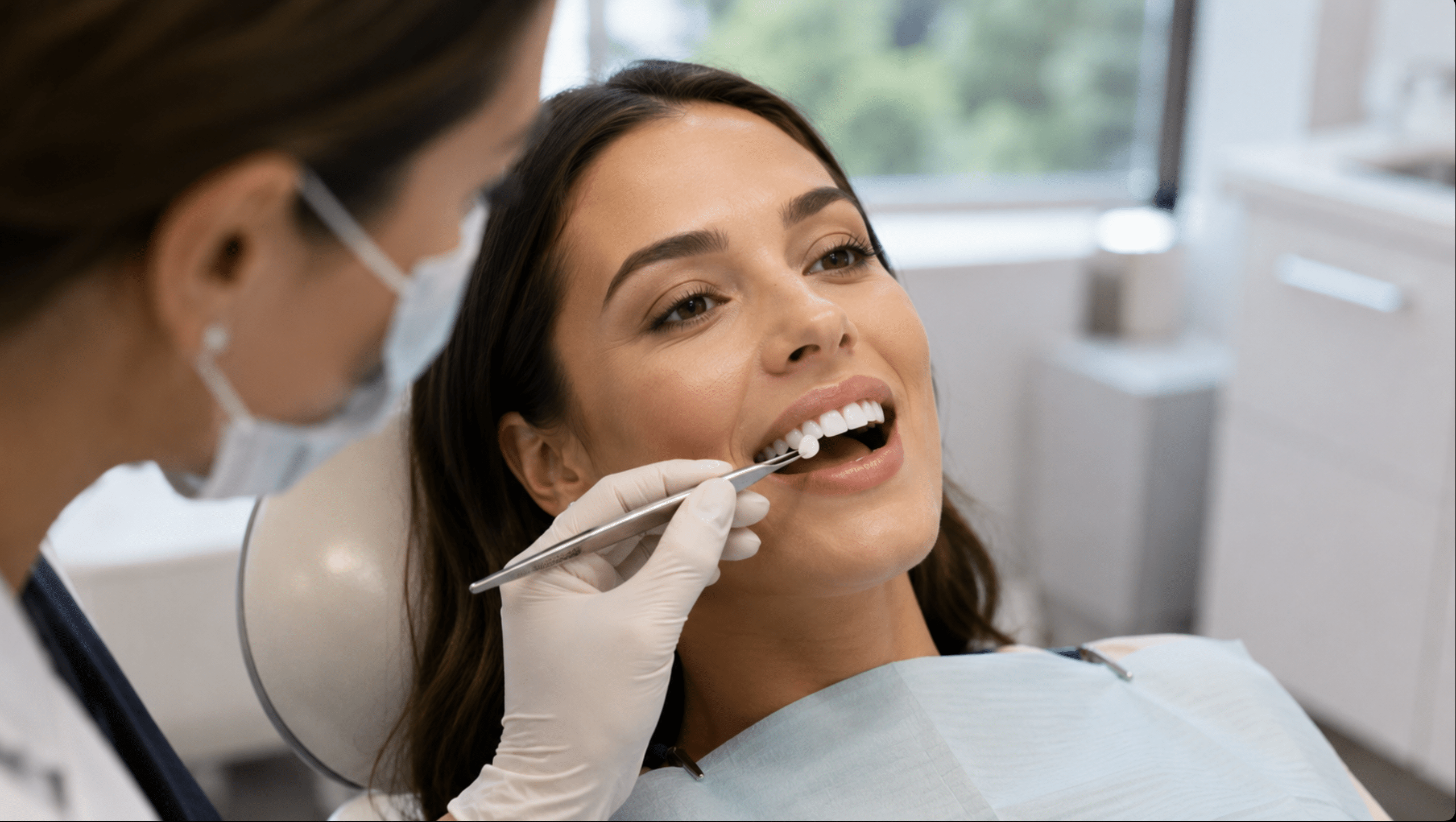
A porcelain veneer is a thin shell, about 0.3 mm thick, bonded to the front of a tooth you already have. Your dentist removes just a sliver of enamel to make room for it. Everything behind and beside the tooth stays untouched. That makes veneers a conservative, cosmetic treatment for teeth that are basically sound.
A crown is closer to 1 mm thick and caps the whole tooth like a helmet. To fit one, the dentist reshapes the tooth on all sides. Crowns belong to restorative dentistry, not just cosmetic dentistry, because they rebuild and protect teeth that are cracked, heavily decayed, or weakened.
That single sentence settles most of the confusion.
Veneer
Cosmetic · Healthy teeth
- Covers the front surface only
- About 0.3 mm thick
- A sliver of enamel removed
- For staining, chips, gaps, and shape
Crown
Restorative · Damaged teeth
- Caps the entire tooth
- About 1 mm thick
- Tooth reshaped on all sides
- For cracked, decayed, or weakened teeth
When You Actually Need a Crown
Sometimes the choice is made for you. A veneer can't save a tooth that's structurally compromised, and forcing one on will only lead to failure down the road.
You likely need a crown if your tooth:
- Has had a root canal and needs protection from fracturing
- Is cracked, broken, or significantly worn
- Has a large old filling with little healthy tooth left around it
- Is decayed beyond what a normal filling can repair
In these cases the tooth needs full coverage to survive, and a crown delivers it.
A useful rule: if your dentist recommends a crown for a front tooth that looks cosmetically fine, ask whether the structural issue truly requires full coverage or whether a more conservative option could work. Good dentists preserve tooth structure whenever they safely can.
When a Veneer Is the Better Choice
If your tooth is healthy and your complaint is purely about appearance, a veneer is almost always the smarter pick. It removes far less of your natural tooth and targets exactly the problem you see in the mirror.
Veneers shine for:
- Permanent staining that whitening won't fix
- Small gaps between front teeth
- Chips, cracks in the surface, or worn edges
- Slightly crooked or unevenly sized teeth
Because veneers focus on the smile zone, most people treat the front six to eight teeth that show when they talk and laugh. If your teeth are significantly misaligned, your dentist might suggest straightening them with Invisalign first, then placing veneers on a properly positioned smile.
Veneers Pros and Cons
No treatment is perfect. Here's an honest look at the veneers pros and cons before you decide.
The pros:
- Natural, lifelike appearance, especially with porcelain
- Conservative, since less enamel is removed than for a crown
- Stain-resistant when made of porcelain
- Fast, with most cases done in two to three weeks
- Long-lasting, often 10 to 20 years
The cons:
- Permanent, because the enamel removed doesn't grow back
- Not repairable, so a cracked veneer is replaced, not fixed
- Rarely covered by insurance, since they're cosmetic
- Possible short-term sensitivity after preparation
- Not suitable for structurally damaged teeth
The biggest mental hurdle for most people is permanence. Once enamel is removed, that tooth will always need a veneer or crown on it. That's not a reason to avoid them, but it is a reason to choose your dentist carefully.
Cost Comparison: Veneers vs Crowns
Price often surprises people, because the cheaper option depends on your situation rather than a fixed rule.
| Treatment | Typical Cost Per Tooth | Insurance |
|---|---|---|
| Porcelain veneer | $900 to $2,500 | Rarely covered (cosmetic) |
| Composite veneer | $250 to $1,500 | Rarely covered (cosmetic) |
| Porcelain crown | $1,000 to $3,000 | Often partially covered (functional) |
| Crown (all materials) | $800 to $3,500 | Often partially covered (functional) |
Two things matter here. First, in high-cost cities like San Francisco, both treatments sit at the upper end of these ranges. Second, insurance changes the math. Because crowns are usually deemed medically necessary, many plans cover 50 to 80% after your deductible. Veneers are treated as elective and almost never covered. So a crown with a higher sticker price can end up costing you less out of pocket than a veneer, depending on your plan.
If you're weighing the full investment for a smile makeover in San Francisco, our breakdown of local veneer pricing covers what Bay Area patients actually pay.

How Long Do Veneers Last?
This is one of the most searched questions in cosmetic dentistry, and the answer is reassuring. Porcelain veneers last 10 to 20 years with proper care. Composite veneers have a shorter life, usually 5 to 7 years, because the resin wears and stains faster than ceramic.
What extends their lifespan? Brushing and flossing daily, avoiding using your teeth as tools, skipping habits like chewing ice or pens, and wearing a nightguard if you grind. Routine dental visits catch small issues before they become veneer-replacing ones.
Do Veneers Stain?
Here's a question worth its own answer: do veneers stain? Porcelain veneers strongly resist staining, because the ceramic surface is smooth and non-porous, so coffee, red wine, and tea don't sink in the way they do with natural enamel. Composite veneers are a different story. The resin is more porous and will gradually pick up stains over the years, which is one reason porcelain is the premium choice.
One catch most people miss: veneers can't be whitened. If you ever bleach your natural teeth, the veneers stay the shade they were made, so they're color-matched at placement to the smile you want long-term.
Are Veneers Worth It?
After all the comparisons, the question that decides everything: are veneers worth it?
For the right candidate, veneers are one of the highest-impact cosmetic treatments available, and most patients say the confidence boost was worth every dollar. The key phrase is "right candidate." If your teeth are healthy and your concern is appearance, veneers solve in two weeks what would otherwise nag at you in every photo for years. Patients tend to describe the change less as new teeth and more as no longer thinking about their teeth at all: smiling first in photos, speaking up in meetings, saying yes to the event instead of finding a reason to skip it.
They're less worth it if a cheaper treatment achieves the same result. Mild staining might respond to professional whitening. A single chip might only need bonding. A truly damaged tooth needs a crown, not a veneer. The smart move is a consultation where a dentist tells you honestly which tier your case falls into, rather than upselling you to the most expensive one.
When you amortize porcelain veneers over their 10 to 20 year lifespan, the yearly cost is modest for something you see and use every single day.
Making the Right Choice for Your Smile
The veneers vs crowns decision isn't really about which one is better. It's about which one your tooth needs. Healthy tooth with a cosmetic flaw points to a veneer. Damaged or weakened tooth points to a crown. Cost, longevity, and insurance all factor in, but the structural question leads. Walk into your consultation knowing that and you'll get a straight recommendation instead of a sales pitch. Both veneers and crowns are part of the wider field of cosmetic dentistry in San Francisco, which our complete guide covers end to end.
Frequently Asked Questions
What's the difference between veneers and crowns?
A veneer covers only the front of a tooth and is used for cosmetic improvements on healthy teeth. A crown covers the entire tooth and is used when a tooth is cracked, decayed, root-canaled, or structurally weak. In short: veneers for appearance on sound teeth, crowns for damaged teeth that need protection.
Can veneers be whitened?
No. Veneers can't be whitened, because the porcelain or composite doesn't respond to whitening agents the way natural enamel does. This is why your dentist color-matches them to your desired shade at placement. If you want a brighter smile, whiten your natural teeth first, then match the veneers to that result.
Are veneers worth it for front teeth?
Yes, front teeth are exactly what veneers are designed for. The front six to eight teeth make up your visible smile, and veneers correct staining, chips, gaps, and shape there with natural-looking results. For purely cosmetic concerns on healthy front teeth, veneers are usually the ideal choice.
Veneers vs crowns vs bonding: which should I choose?
Bonding is the most conservative and cheapest, ideal for small chips and minor fixes, but it stains and chips more easily. Veneers are the mid-tier cosmetic upgrade for healthy teeth. Crowns are for structurally damaged teeth that need full coverage. Your dentist matches the treatment to the severity of the issue.
How long do veneers last on front teeth?
Porcelain veneers on front teeth last 10 to 20 years with good care. Front teeth take less chewing force than back molars, which helps, but habits like biting nails or grinding can shorten their life. A nightguard and regular checkups protect them.
Does insurance cover veneers or crowns?
Crowns are often partially covered, typically 50 to 80% after your deductible, because they're considered medically necessary. Veneers are treated as cosmetic and are rarely covered. Always confirm with your provider, and ask your dentist's office about payment plans for the out-of-pocket portion.
One exam, a clear answer
Not Sure Which One You Need?
The fastest way to get a real answer is an exam, not a guess. Book a consultation at Skoulas DDS and Dr. Skoulas will tell you honestly whether your smile calls for veneers, crowns, or something more conservative, with clear pricing before you commit.